Most culture change programmes fail for a simple reason
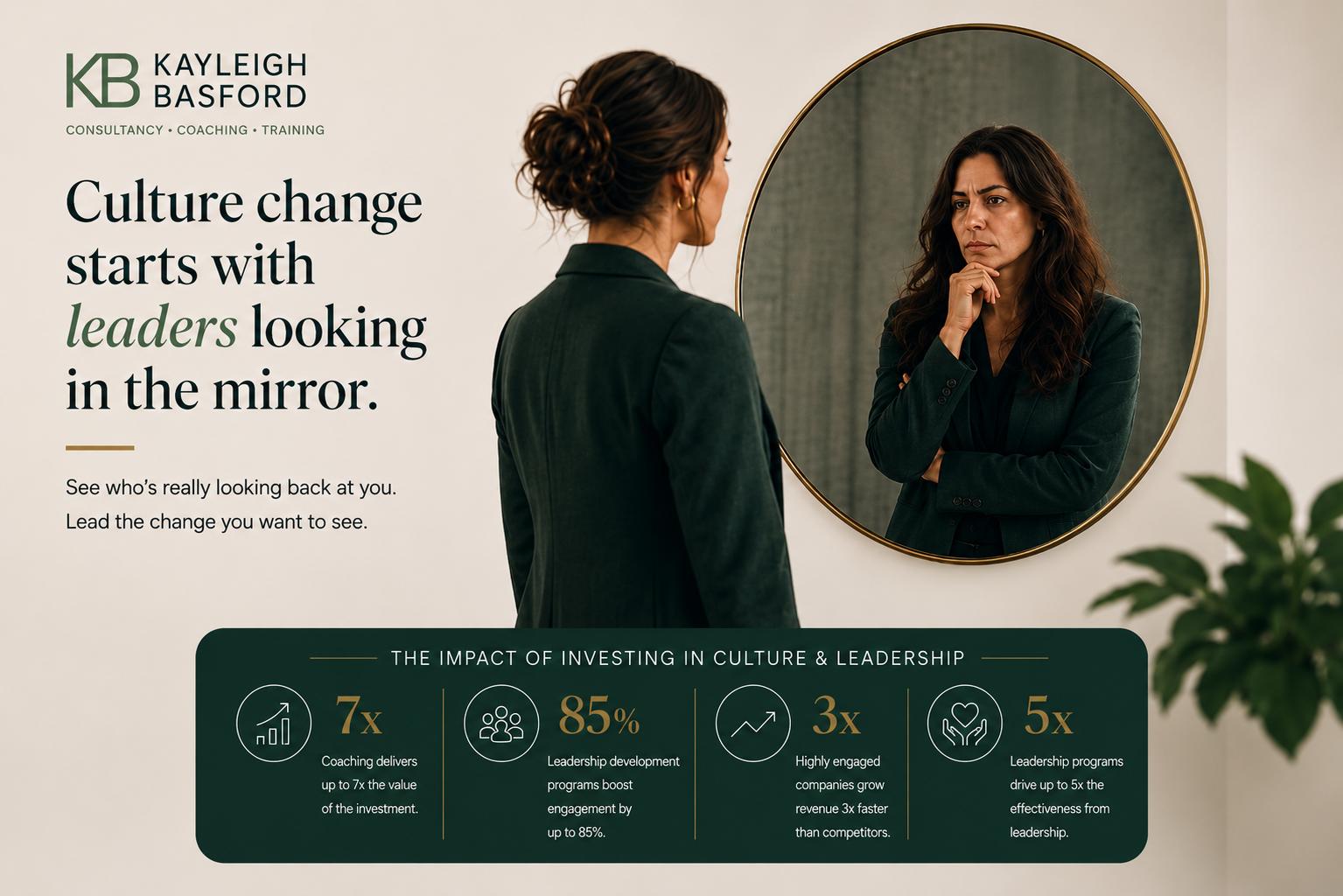
Why do most culture change programmes fail?
The programme leads, senior leaders, whomever the powers that be are, try to change culture without changing leadership behaviour.
For my final essay of my previous course, while researching coaching cultures, I noticed a pattern.
Many organisations know what culture they want:
✅ More innovation
✅ More collaboration
✅ More psychological safety
✅ Better diversity of thought
But their leadership systems still reward:
❌ Being right rather than being curious
❌ Control rather than empowerment
❌ Conformity rather than challenge
❌ Short-term delivery over long-term results (you need some of both)
The result?
The organisation announces a new culture while continuing to reinforce the old one.
This is why coaching cultures matter
A coaching culture isn't a programme.
It's not a workshop.
It's not teaching managers a few coaching questions.
A true coaching culture starts when leaders become willing to examine the hidden assumptions driving their behaviour.
Assumptions such as:
- "I need to have all the answers"
- "Being challenged undermines my authority"
- "The safest option is to stick with what's worked before"
- "Good people think like me"
Until those assumptions are surfaced and challenged, culture rarely shifts.
Start with leadership
In my experience, the biggest mistake organisations make is starting with the wider workforce.
The biggest opportunity is starting with the leadership team.
When senior leaders model curiosity, listening, reflection and genuine openness to challenge, culture change becomes achievable.
When they don't, people see change as just another initiative that will disappear in 12 months.
Culture change isn't about telling people what to do differently.
It's about helping leaders think differently.
That's where coaching becomes transformational rather than transactional.
The research supports this
Edgar Schein, one of the leading thinkers on organisational culture, argued that culture is created, embedded and reinforced primarily through the behaviour of leaders.
Similarly, Amy Edmondson's work on psychological safety shows that environments where people feel safe to speak up are shaped largely by leadership behaviours rather than organisational slogans.
Research from the International Coaching Federation (ICF) has also found that organisations with strong coaching cultures report:
- Higher levels of employee engagement
- Stronger leadership development
- Better overall performance
Why one-off workshops aren't enough
This is also why I rarely recommend one-off workshops.
One-offs can create awareness, but awareness alone rarely changes behaviour.
Real transformation requires ongoing reflection, practice, feedback and accountability over time.
If an organisation is serious about transforming its culture (and let's face it, in today's environment it should be) then it needs more than a single workshop.
It needs leaders who are willing to continually examine how their behaviours, assumptions and decisions shape the culture around them.
Ready to transform your culture?
Culture change starts with leadership. Let's explore how coaching can help your leaders think differently.